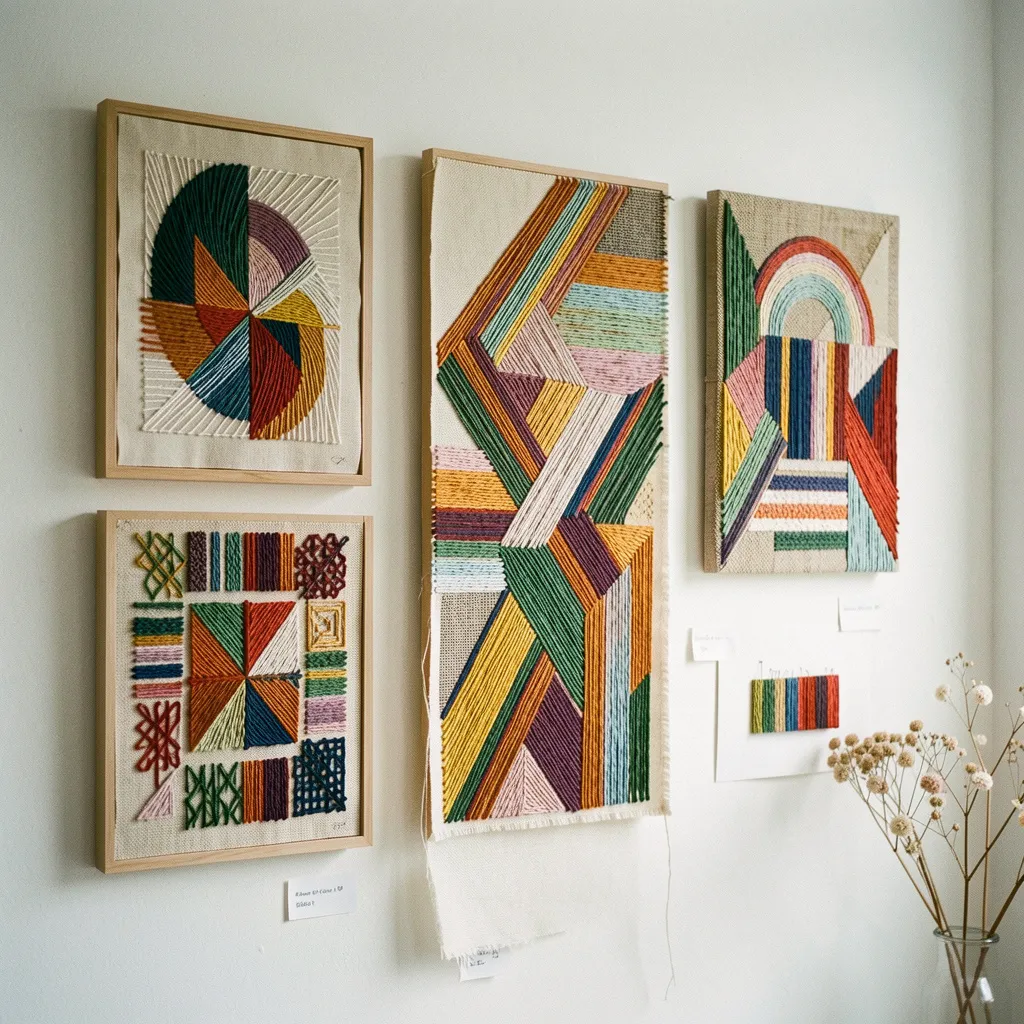
Pattern Modules
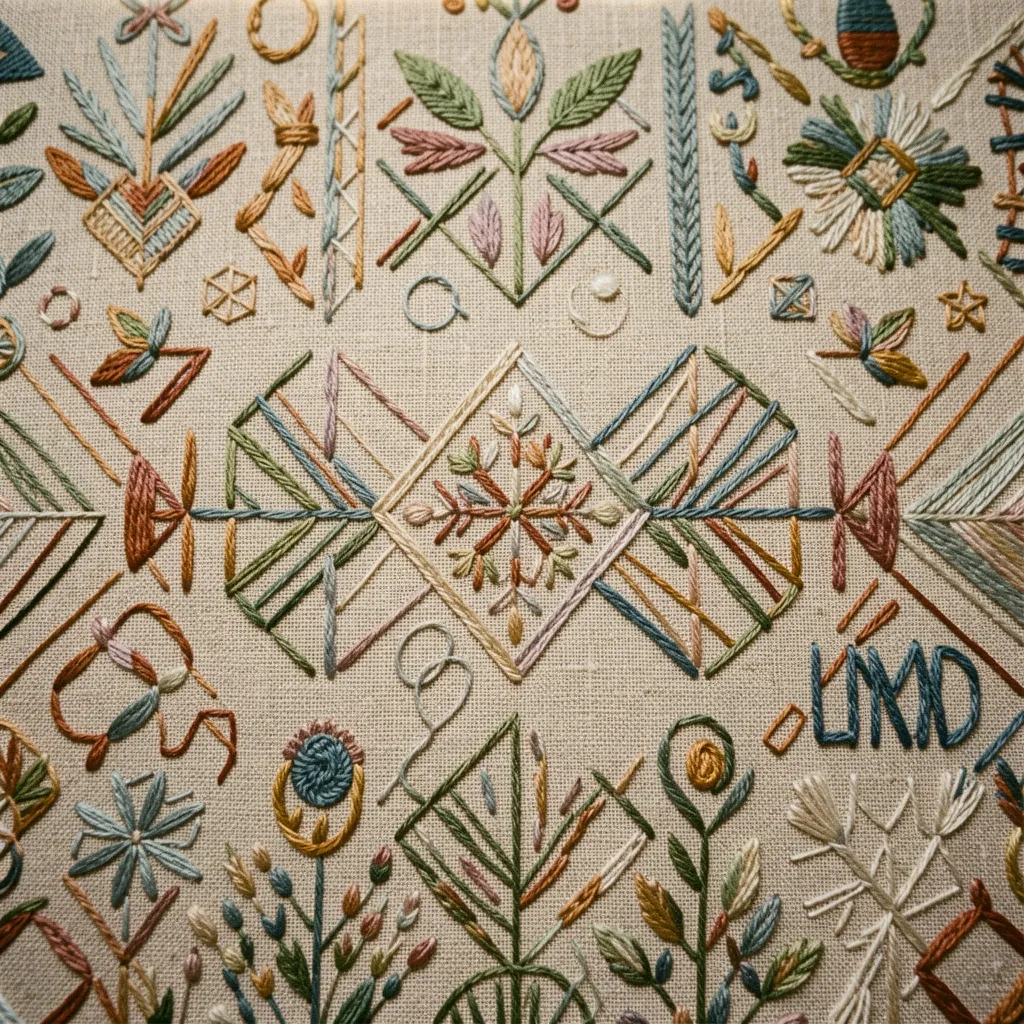
French Knot Modules
French knots represent one of the fundamental building blocks in contemporary embroidery. These knots create raised texture points that can be arranged in various densities to produce different visual effects.
When used systematically, French knots can form patterns ranging from subtle texture fields to bold graphic elements. The technique involves wrapping thread around the needle before insertion, creating a small, consistent knot on the surface.
Stitching Techniques
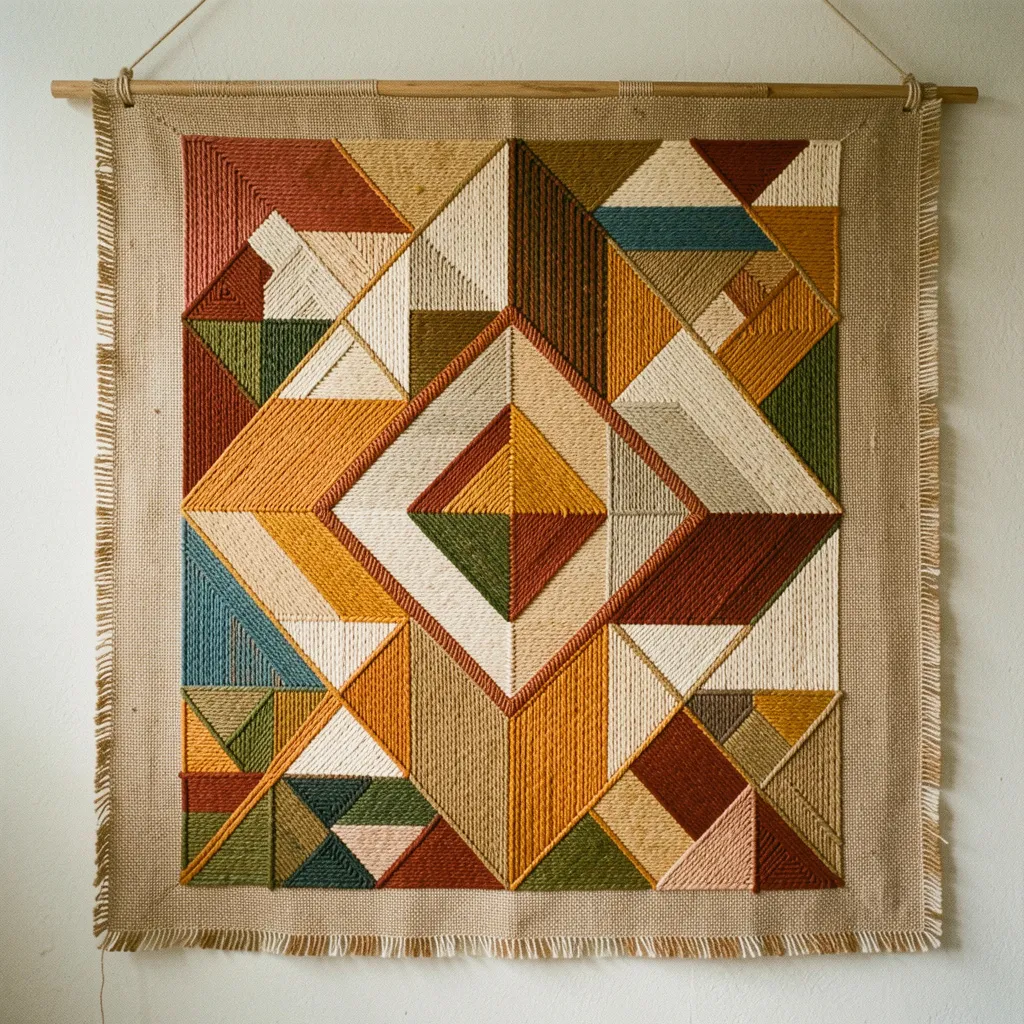
Satin Stitch
Smooth, parallel stitches that create solid color areas. This technique provides clean edges and uniform coverage, making it ideal for geometric shapes and defined areas.
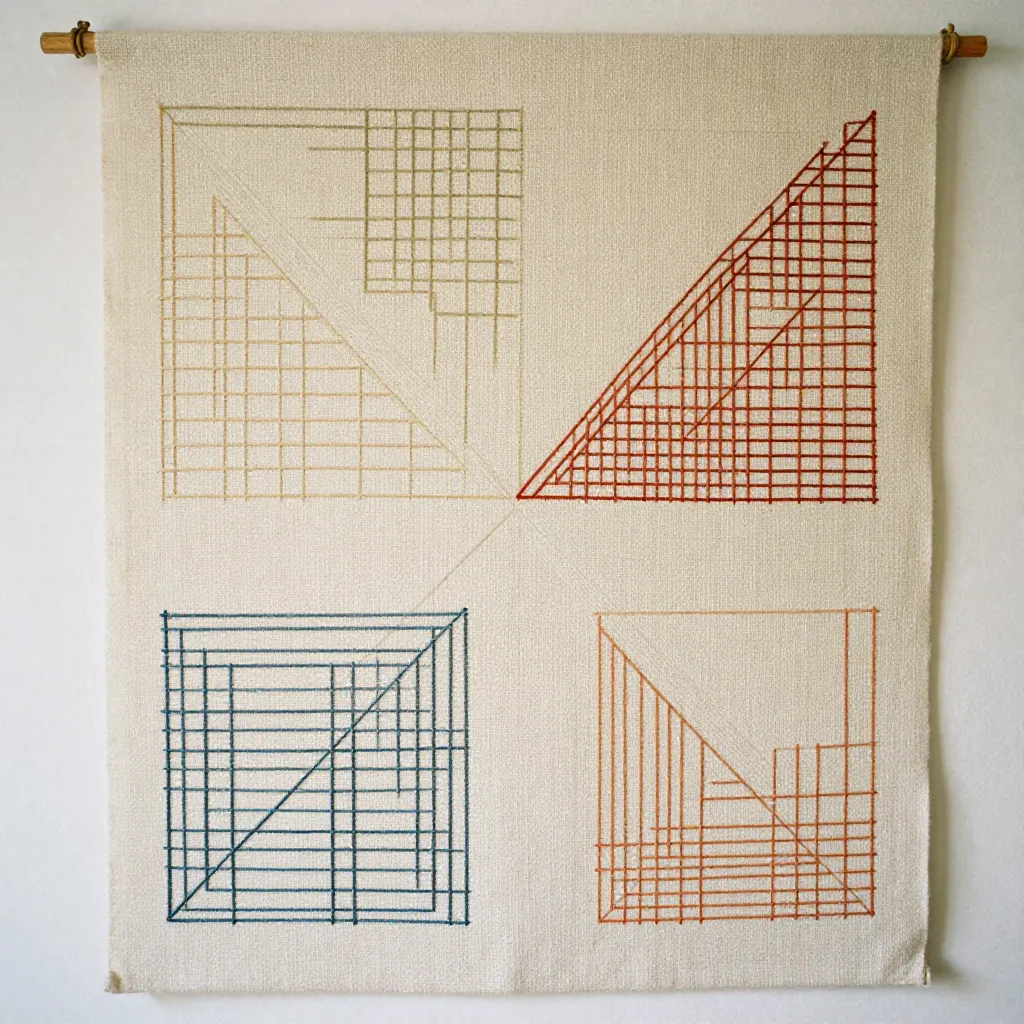
Long and Short
Graduated stitches of varying lengths create smooth color transitions and shading effects. This technique allows for realistic representation of form and depth.
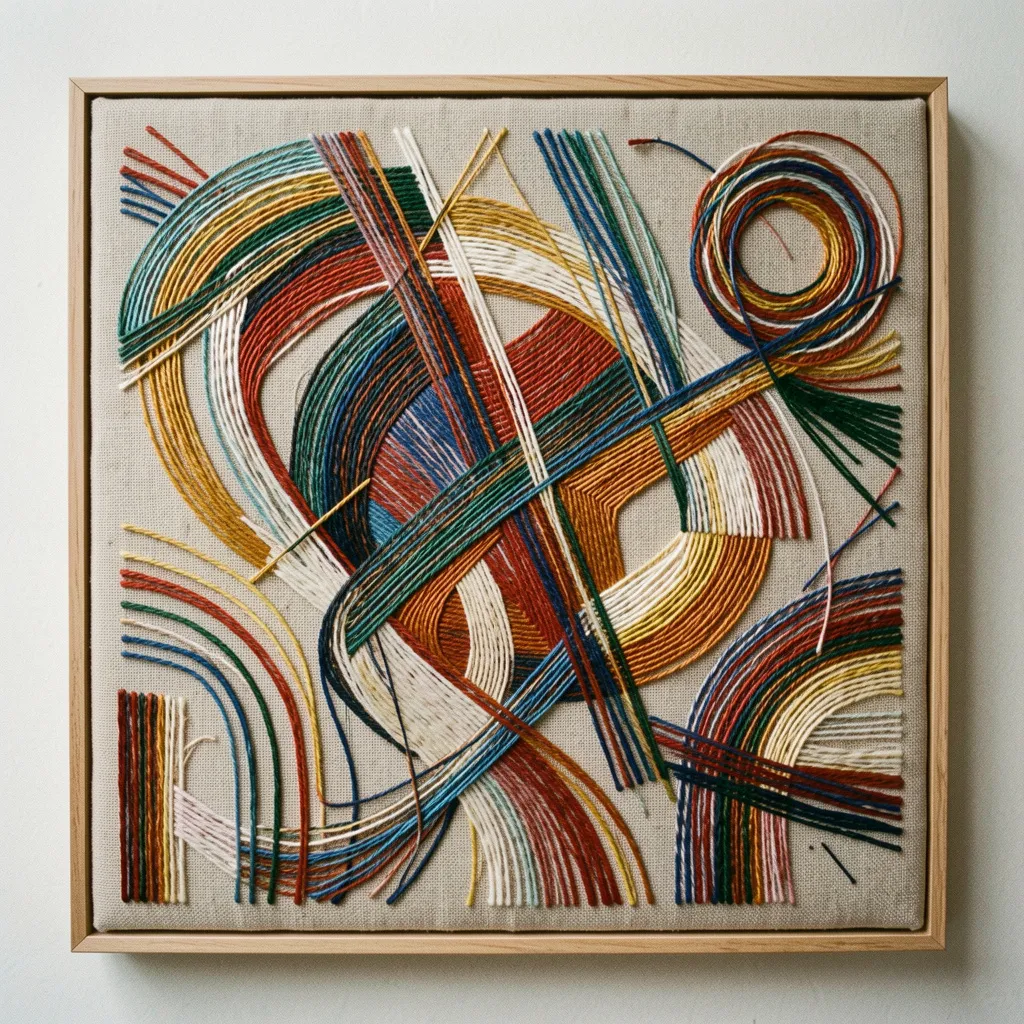
Chain Stitch
Interconnected loops form continuous lines and curves. This technique offers flexibility in creating flowing patterns and decorative borders.
Pattern Composition
Data-Driven Design
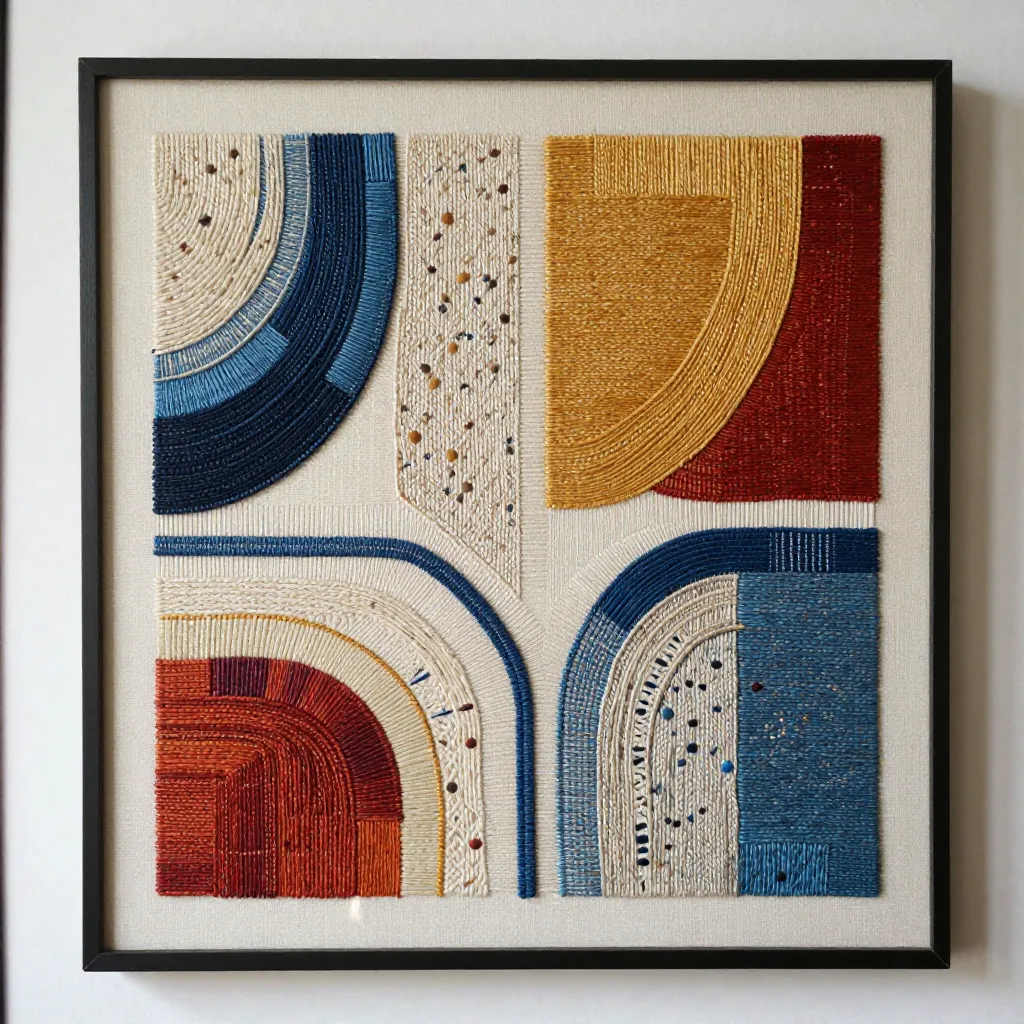
Contemporary patterns can be understood as modular systems where different stitch types function as data points. By combining these modules in various arrangements, we create complex visual compositions.
Each pattern module has specific characteristics: density, texture, color interaction, and visual weight. Understanding these properties allows for intentional design decisions that result in cohesive artworks.
Technical Specifications
Thread Tension
Consistent tension ensures uniform stitch appearance and prevents fabric distortion. Proper tension varies depending on thread type and fabric choice.
Stitch Density
The spacing between stitches affects both visual appearance and material usage. Denser patterns create more solid coverage but require more thread.
Color Interaction
Thread colors interact differently depending on stitch type and arrangement. Understanding these interactions helps achieve desired visual effects.